

The climate has changed, the solutions already exist
6' read - published 17 September 2026
The summer of 2026 will be remembered as a turning point for the 21st century. Five heatwaves swept across Europe. In a single week in June, ten countries broke their all-time national temperature records, reaching 41.9 °C in Czechia and 41.7 °C in Germany(1). Western Europe recorded its hottest June-July period ever measured, 2.79 °C above average(2). By 5 August, 500,000 hectares had burned in the European Union, compared with 380,000 in 2025 on the same date(3). Half the territory of the EU and the United Kingdom tipped into drought(4), and the Rhine fell below 75 centimetres at Cologne(5). At the same moment in Japan, Chiba prefecture received three times its average August rainfall in half a day(6). Drought and heat on one side, extreme rainfall on the other. These opposing phenomena stem from the same mechanism, and they require the built environment to be sized for extremes rather than for an average.
These events reach directly into our streets, our schools, our offices and our homes. The building and construction sector holds a unique position in this shifting environment. It is at once one of the major causes (37 % of total emissions)(7) and one of the levers capable of easing the consequences.
Most of the innovations gathered here are not new. Recovering heat from computer servers or using phase change materials are long-established techniques, some going back several decades. These are not technological bets, but choices that are already proven, measured and immediately actionable.
Cooling
Before any technology, the problem is physical first: glazing lets in a disproportionate share of solar heat, and a poorly oriented façade turns a building into a thermal collector. Most clients already have the first-tier answers at hand, namely the double skin, free cooling and the ground-air heat exchanger, that buried duct which tempers fresh air before it enters the building. The solutions that follow build on that foundation.
The Siamese Towers in Santiago use a double skin of glass and fibre cement: the air gap between the two layers acts as a chimney that draws heat out by suction. The KMC Corporate Office in Hyderabad goes further, with a skin of aluminium mesh fitted with hydroponic trays and a misting system.
On glazing, the EnOB:FLEX-G 4.0 project is developing electrochromic films that change tint under an electrical impulse to regulate transmitted heat. SolarGaps turns solar shading into generation, with adjustable blinds that track the sun.
Evaporative cooling returns in two very different forms. Brikoole is a 3D-printed honeycomb brick that keeps its structure damp, lowering indoor temperature by an average of 6.2 °C according to the designer's tests(8). CoolAnt applies the same principle to public space, with a second skin of terracotta pots fed by drip irrigation, made by local artisans in New Delhi.
Cooling also happens around the building, not only within it. In Aubervilliers, Tierce Forêt replaces asphalt with a draining material and trees with high transpiration rates: infiltrated rainwater is stored, then feeds the cooling effect during dry spells. GoRespyre grows moss on bioreceptive concrete façades, acting at once on surface temperature, air quality and noise.
For retrofit, Ventive offers passive ventilation with heat recovery, delivering 3 to 4 degrees of cooling. Ventotherm Twist integrates directly into the window, recovers up to 80 % of the heat and filters particulates(9). Enerdrape, a Swiss start-up spun out of EPFL, captures the constant temperature of car park and metro station basements to feed a heat pump.





Making better use of energy
Beyond insulation, which remains the main source of losses in the existing stock, two levers allow further progress: occupant behaviour, and the heat already produced and then wasted by computer servers, lifts or industrial processes.
The D4 data centre operated by Infomaniak in Geneva recovers all of the heat from its servers. It feeds that heat into the district heating network, covering the needs of up to 6,000 homes. At Kalundborg in Denmark, nine private and public companies have been exchanging steam, hot water and industrial residues since the 1970s. It is one of the world's first industrial ecology networks, with a record of 635,000 tonnes of CO₂ avoided each year(10).
Within the structure and the envelope itself, several avenues stand out for their principle rather than their brand. Researchers at Chalmers have developed a rechargeable cement-based battery using carbon fibres, with a density of 7 Wh/m²(11). Mitrex turns the façade into a productive surface with solar panels that reproduce the appearance of granite or wood, and Nanolope PCM, a phase change material integrated into walls, stores roughly 14 times more heat by volume than plaster or concrete(12).
Two further innovations move energy rather than produce it. Water-Filled Glass inserts a layer of water between two panes to absorb solar heat and redistribute it, for a reduction in bills estimated by the research team at 25 %. Polar Night Energy stores heat in sand for several months, at a cost below €10 per kWh of capacity.
The KEB R6 regenerative drive converts the braking energy of lifts back into electricity, with a payback period under two years on gearless systems. The digital boiler from Stimergy, now operated by Neutral-IT, immerses servers in a heat transfer fluid to preheat domestic hot water, covering 30 to 60 % of that demand(13). TABSOLAR integrates solar thermal elements into the ventilated façade to feed a heat pump, with no additional ground footprint.
On the usage side, Wattblock guides Australian apartment buildings through an eight-step process to cut energy waste. The ABC project in Grenoble takes the approach as far as social engineering, with tenants selected and supported over two years, for consumption three times lower than in conventional housing.


Wasting less water
Two levers make it possible to act on water without building new infrastructure: reusing what has already served, and making visible a consumption that never is at the moment it occurs.
Gecko, a miniaturised instant water heater, recovers more than 84 % of the heat from waste water to preheat cold water, with up to 70 % savings announced. WeCo treats the water in public toilets bacteriologically and then by electrolysis so it can be reused in a closed loop, with a claimed water saving of 97 %(14).
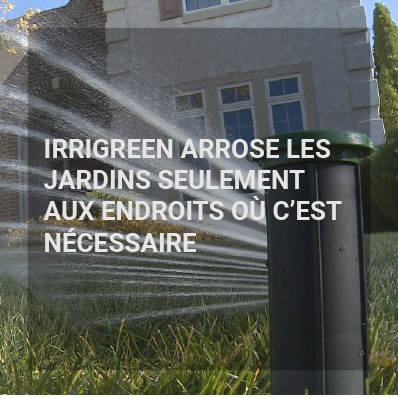
Irrigreen maps the actual shape of a garden in order to water only the dry zones, halving the quantity of water used according to the manufacturer. Luniwave, designed by engineering students at INSA Lyon, displays water consumption in real time during a shower without ever restricting the flow, for an announced reduction of 30 %.
Storage, finally, needs no new land: a roof or a sports field can be enough. In Amsterdam, Blue-green roof has converted 12,683 m² of roofs, able to retain more than 90 % of rainfall when a valve driven by weather forecasts regulates their water level(15), asking for nothing more than a flat roof and a little nerve. In Hong Kong, the Happy Valley Underground Stormwater Storage Scheme houses a 60,000 m³ tank beneath a racecourse(16), reusing stormwater for irrigation and toilet flushing without consuming any additional land.




Breathing better air
Air quality plays out in two places: on surfaces exposed to the outdoors, where urban pollution can be partly broken down, and indoors, where the concentration of pollutants often exceeds that of outdoor air.
The smog-eating concrete from Italcementi incorporates a titanium dioxide coating that breaks down airborne pollutants under sunlight, with a reduction in nitrogen oxides of up to 45 % under ideal conditions(17). Krion® K·Life 1100 from Porcelanosa applies the same photocatalysis to a continuous, seamless surface, limiting bacterial growth.
ARVE monitors particulate matter and volatile organic compounds in real time, making indoor air quality measurable. The Capo 425 Lana brick combines fired clay with sheep's wool, whose natural fibres absorb volatile compounds and help purify indoor air, with no additional synthetic insulation.


Facing disasters
Adaptation is not limited to thermal comfort: it also covers brief, destructive events that the existing stock was never designed to absorb.
FloodFrame houses a floating tarpaulin in a perimeter trench around the building, which deploys automatically under the pressure of rising water, with no power supply. The POP-UP project, developed by the Danish practice Third Nature, stacks a rainwater reservoir and an underground car park, the parking structure rising by hydrostatic thrust as the reservoir fills.
Zillow has built climate risk data developed with the First Street Foundation into its property listings, covering flood, fire, high winds and extreme heat at the scale of each individual property(18).


None of these innovations will solve climate disruption on its own. Taken together, they show that a façade can generate electricity, that a wall can store and redistribute heat, that a sports field can hold back rainfall, and that a car park can become a piece of the city again. These answers exist, they have been measured, and they are already installed somewhere.
Everywhere, the discussion has already begun. Under pressure from events and from public opinion, municipalities, cantons and governments are likely to tighten their regulatory frameworks step by step: stricter standards, higher requirements in building permits, climate criteria in public tenders. Whether this awareness survives the winter remains to be seen.
Those who have already absorbed these solutions will hold an advantage, in cost, in reputation and in their ability to meet tomorrow's requirements. The range described here is not a set of universal answers, but a playing field that has already been mapped, where all that remains is to choose.
(1) Sources: Le Devoir / AFP, Bilan d'une canicule « historique » en Europe, 3 July 2026; Météo Consult, Records historiques de températures en Europe, 28 June 2026.
(2) Source: Copernicus Climate Change Service, Highest July global ocean surface temperatures as exceptionally hot, dry conditions fuel wildfires in Europe, 10 August 2026.
(3) Source: Euronews, based on EFFIS data as of week 31, Incendies en Europe : 2026 est-il déjà l'année la plus grave jamais enregistrée ?, 13 August 2026.
(4) Source: Joint Research Centre of the European Commission (JRC), reading of 12 August 2026, reported by to brief, 17 August 2026.
(5) Source: AFP, Sécheresse en Allemagne : le Rhin atteint un niveau historiquement bas à Cologne, 1 August 2026, based on the German Waterways and Shipping Administration (WSV).
(6) Sources: NHK and AFP, reported by Touch Actu, 14 August 2026; Japanese Ministry of Land, Infrastructure, Transport and Tourism.
(7) Source: UN Environment Programme, Building Materials and the Climate: Constructing a New Future, 12 September 2023.
(8) Source: James Dyson Award, Brikoole, 2024.
(9) Source: Schüco, Ventotherm Twist, accessed 2026.
(10) Source: Kalundborg Symbiosis, The world's first industrial symbiosis, accessed 2026.
(11) Source: Chalmers University of Technology, World first concept for rechargeable cement-based batteries, 2021.
(12) Source: Martin-Luther-Universität Halle-Wittenberg, Hochleistungs-Wärmespeicher für Gebäude, 2021.
(13) Source: Neutral-IT, La chaudière numérique, accessed 2026.
(14) Source: L'Usine Nouvelle, WeCo invente des toilettes écologiques et autonomes, 7 September 2022.
(15) Sources: RESILIO, Amsterdam's smart roof project, 2022; Haer et al., The building-scale performance of blue-green roofs, Vrije Universiteit Amsterdam and Hogeschool van Amsterdam, 30 March 2022.
(16) Source: Drainage Services Department, Hong Kong, Happy Valley Underground Stormwater Storage Scheme, 2012.
(17) Source: Interesting Engineering, Smog-eating concrete, accessed 2026.
(18) Source: Zillow, What is climate risk data, accessed 2026.