

Space optimization strategies
6' read - published June, 26th 2025
Across the globe, urban centers are becoming denser, housing needs are changing, and space is emerging as a critically limited resource. Cities like Tokyo, New York, and London exemplify this transformation. They are facing shrinking household sizes, escalating real estate prices, and a scarcity of buildable land.
In Japan, the overall population has remained relatively stable over the past decade, but this masks a striking contrast between urban growth and rural decline. While many rural prefectures are losing residents—some by more than 5% compared to 2015—major cities like Tokyo continue to attract people. In fact, several Tokyo wards are experiencing population growth of up to 4% annually, underscoring the intensifying demand for housing and infrastructure in urban areas. At the same time, Japan has the world’s lowest percentage of people under 15 and the highest proportion of people over 65(1). It is therefore unsurprising that single-person households have become the most common household type in Japan, now accounting for 34% of all households(2).
Even in countries often associated with abundant space, such as Switzerland, approximately 74% of the population now lives in urban areas(3). Cities such as Zurich, Geneva, and Basel are under increasing pressure to accommodate a growing and diversifying population within a tightly constrained land area. Simultaneously, the average Swiss household size has declined to just 2.18 people (as of 2022), down from 2.33 in 2000, reflecting a nationwide shift toward smaller living arrangements—often for one person(4).
These demographic and spatial trends affect all age groups. Students seek affordable micro-apartments near universities. Digital nomads value compact, flexible living solutions. Seniors often downsize for comfort and accessibility. Even families are rethinking traditional housing layouts. All of these groups face shared challenges: rising property prices, limited development land, and growing ecological awareness.
This context highlights a crucial question: How can we use space more efficiently without compromising our quality of life?
From Tokyo's micro-apartments to London's experiments with compact housing, innovative spatial strategies are redefining how we live and work in dense urban environments. These approaches embrace cultural shifts toward minimalism and multifunctionality, showing that comfort and efficiency can go hand in hand. Thoughtful design and adaptable architecture enable us to maximize every square meter while responding to practical, economic, social, and environmental constraints.
This article explores how we can rethink spaces by learning from high-density models and reimagining our relationship with them in ways that support human well-being. For those seeking more individualized guidance tailored to their specific situation after reading this article, there is a tool called Intensi’score. This practical assessment evaluates building usage through a concise questionnaire and offers actionable strategies based on principles such as chronotopy, mutualization, hybridization, and reversibility.
Students - Young professionals
Students are among the most space-conscious urban residents. They typically live on tight budgets, prioritize proximity to universities, and need functional environments that support both rest and intensive study.
In countries like Korea, Japan, and China, study environments at schools and homes are often limited or overcrowded. This has driven demand for shared, pay-per-use Study rooms that offer quiet, reservable spaces equipped with lockers and other amenities. These facilities provide students with a focused atmosphere outside their homes, often located conveniently near campuses or transit hubs.
The housing crisis in South Korea during the early 2000s further underscored the need for affordable student accommodation. In response, ultra-compact Goshiwon rooms, typically around 3 m² in size, were developed as low-cost, short-term housing options during exam periods. Despite their minimal footprint, they provided students with private sleeping quarters and a workspace.
In Europe, solutions have also emerged to address similar challenges. The Smart Student Tengbom Unit in Sweden is a prime example: a 10 m² living space that integrates affordability, sustainability, and clever spatial design. It illustrates how compact housing does not have to sacrifice comfort or style.
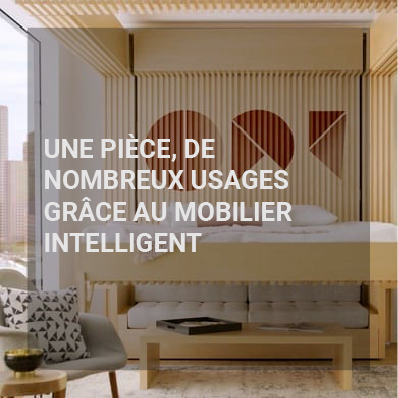
A key element in making such compact living feasible is multifunctional, space-saving furniture. Italian design firm Clei specializes in adaptable interiors, such as foldable beds that transform into sofas or desks. This allows daytime and nighttime functions to coexist within the same room. Similarly, companies like Furlenco support flexible lifestyles by offering modular, often refurbished furnishings on subscription. These solutions enable students to tailor and adapt their environments in a way that is both affordable and sustainable.


Nomads
Digital nomads and mobile professionals are a rapidly growing group with unique spatial requirements. They seek compact, comfortable living environments that are highly adaptable and allow for coexistence of work, relaxation, and socializing. This evolving lifestyle is prompting the real estate and hospitality sectors to rethink traditional models. The result is hybrid concepts tailored to a mobile, multipurpose way of living.
In Switzerland, for example, CityPop offers fully furnished micro-apartments for short- to mid-term stays. These spaces use multifunctional furniture from Clei to support various activities throughout the day, making them ideal for individuals who live and work on the go.
In Beijing, Dot Architects designed the Baitasi House, a modern reinterpretation of a traditional hutong home. It features mobile furniture modules mounted on rails that allow the space to easily shift between zones for sleeping, working, and socializing. This project blends historical architecture with contemporary multifunctional design.
Not all flexibility requires movable parts. The Microflat living concept demonstrates how well-integrated fixed furniture—such as a raised bed with integrated storage stairs that utilize the height of the space—can deliver high functionality in a static layout.
Hybrid hospitality models are emerging as powerful tools for space optimization. The Social Hub, with locations in 13 European cities, combines nomad housing, hotels, co-working spaces, and event venues. It fosters vibrant communities while using space efficiently. Similarly, CitizenM offers compact, multifunctional rooms. Its subscription model, launched during the COVID-19 pandemic, allows remote workers to use hotel rooms as day offices, thus extending the functional value of each room beyond traditional overnight stays.
CityHub takes a modular approach, offering private sleeping pods alongside generous shared spaces, including kitchens, lounges, and workspaces. This balance supports both privacy and community, making dense urban living more efficient.


Professionals
Unlike constantly moving digital nomads, urban professionals often remain in one city for longer periods and prioritize stability, privacy, and productivity. Their housing needs reflect structured work routines and a desire for efficient, well-equipped environments that support professional and personal life.
In Helsinki, the Valo Hotel & Work offers rooms that serve as offices during the day and bedrooms at night, accommodating two different users within 24 hours. This dual-use model increases occupancy efficiency while maintaining professional standards. With coworking spaces, meeting rooms, and an app-based check-in system, Valo appeals to remote workers and business travelers seeking a reliable and functional home base.
In the Netherlands, Zoku combines the comforts of a hotel with a coworking culture. Designed for long-term stays, its loft-style rooms accommodate living and working, and its shared spaces and community events provide opportunities for professional networking. Stays can be as short as one night or as long as several months, making Zoku ideal for professionals on mid-term assignments who expect autonomy and high-quality service.


Families and DINKs
In dense urban areas, families and dual-income, no-kids (DINK) households often face the challenge of balancing comfort, privacy, and functionality in limited space. Unlike students or nomads, these households usually need stable, long-term living arrangements that can adapt over time.
One approach is to introduce flexible, non-permanent spatial divisions. The Singapore-based Never to small project uses double-layered curtains inspired by Japanese shoji screens to define rooms, reduce noise, and add warmth—all without altering the apartment’s layout. Similarly, Molo Design in Vancouver created collapsible honeycomb dividers like Softwall and Softblock, offering acoustic privacy and aesthetic texture that folds flat when not in use.
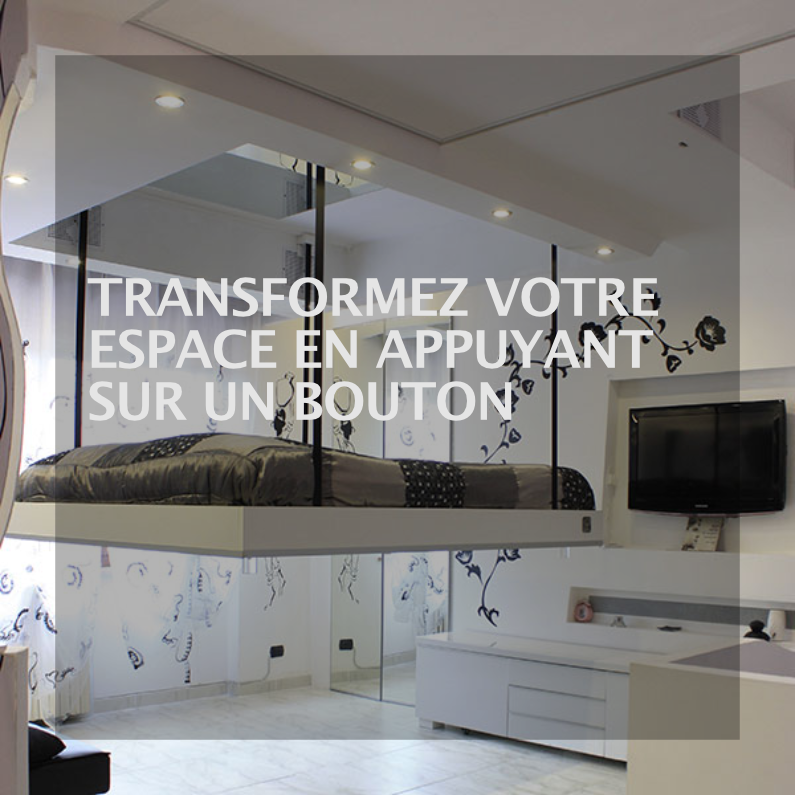
Multifunctional and space-saving furniture is also key. Bed Up Down makes motorized beds that retract into the ceiling, clearing space during the day. Brooklyn-based Ori offers robotic, app-controlled furniture systems that shift between bed, desk, and storage configurations, transforming a single room into a multifunctional home.
For those who want flexible layouts without built-ins, Spoon & Room by Schmidt Groupe offers adaptable furniture systems. These include kitchen islands that double as desks and storage benches that serve as dining seats—designed to help urban households continually adjust their living spaces to changing routines without the need for permanent fixtures.
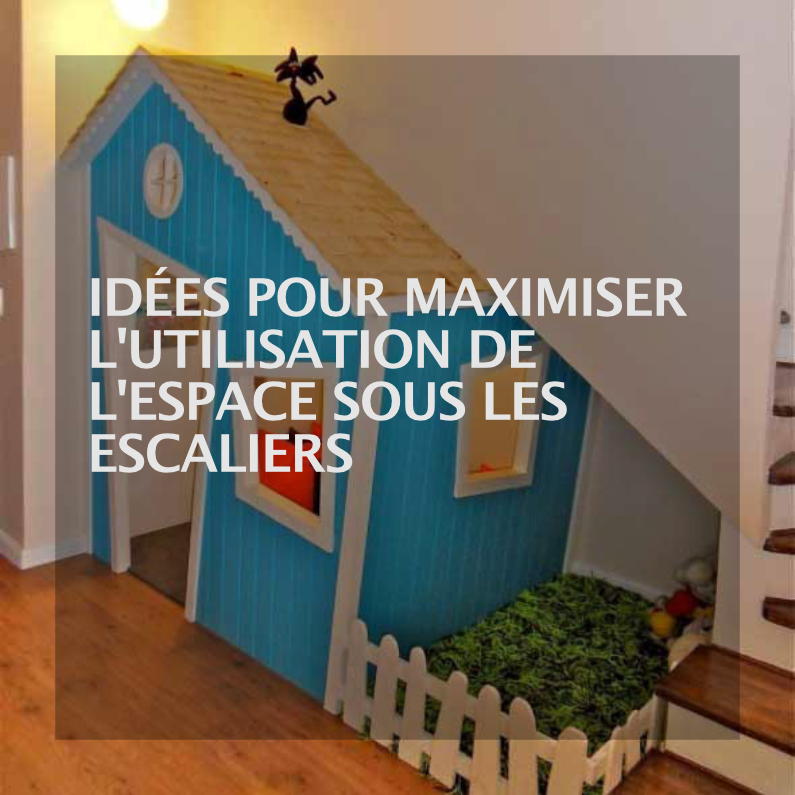
Architectural solutions can also expand usable space in creative ways. In Madrid, MYCC Studio designed a 21 m² apartment using half-floors and ladders to create distinct zones without internal walls. Often-overlooked areas like the Understairs area can be repurposed for growing families by adding built-in cabinets, reading nooks, or children’s play areas—all without expanding the footprint. In a more experimental approach, dRMM’s Sliding house in Suffolk features a mobile outer shell that adjusts the home’s layout, daylight, and privacy throughout the day or season.
Finally, space efficiency also includes shared resources. Tulu installs app-enabled stations in residential buildings, offering on-demand access to tools, appliances, and mobility devices like e-scooters. This model reduces the need for in-unit storage and supports more sustainable, uncluttered living.







Seniors
As populations age and household sizes shrink, urban housing must adapt to evolving physical needs, social preferences, and lifestyle rhythms. Seniors increasingly seek homes that offer independence, safety, and a sense of community without the burden of maintaining oversized properties. Efficient spatial design can help seniors age in place while supporting a healthy housing cycle—where older residents can downsize to more suitable homes, freeing up larger units for younger families.
The Flex House concept addresses this shift with modular floor plans that adapt to residents’ evolving needs. These homes can easily be reconfigured as mobility or household structures change over time, offering a practical solution for aging populations who wish to remain in their homes longer.
In Switzerland, multiple initiatives are actively addressing the spatial and social challenges of aging. In the municipality of Cham, a housing cooperative tackled the common issue of seniors remaining in large family homes after their children had moved out. Instead of forcing relocation, they developed a sensitive alternative: a new building within the same neighborhood offering thirteen smaller, age-appropriate apartments and underground parking. This allowed residents to downsize while remaining in their familiar community—preserving daily routines and social networks, and freeing up larger units for younger households.
Complementing this structural approach, intergenerational housing programs in French-speaking Switzerland take a more social route. Initiatives like the University of Geneva’s “1h per m²” and Elderli connect students with seniors, offering affordable housing in exchange for light support such as companionship or assistance with daily tasks.


As cities grow denser and household needs evolve, the future of living and working will depend not only on square footage but also on how intelligently space is used—while maintaining, or even enhancing, comfort through smart design. Creating space begins with identifying and activating overlooked potential. For example, high ceilings can accommodate mezzanines or lofted beds. Walls can support foldable, multifunctional furniture, such as the systems developed by Clei. Stairwells and awkward corners can become productive zones for storage, work, or play.
Another equally important strategy is to increase the intensity of use over time. Projects like the VALO Hotel & Work demonstrate how spaces can transform throughout the day. A room that functions as an office during the day and a bedroom or event space at night doubles its utility without expanding its footprint. These time-based transformations make better use of existing resources and infrastructure.
Rethinking space is not just about fitting more into less. It's about using space more consciously, frequently, and flexibly. The most sustainable square meter is one that serves many purposes, for many people, at many times, all while nurturing comfort and well-being.
(1) Source: Statistics Bureau of Japan, Population and households of Japan, 2021
(2) Source: Nippon.com, One in Three Japanese Households Consist of Just One Person, August 6th, 2024
(3) Source: Simon Kemp, DATAREPORTAL, Digital 2024: Switzerland, February 23th, 2024
(4) Source: Confédération suisse, Federal Statistical office, Households and living arrangements, December 31st, 2023